


Racing
From Calling to the TV to Calling the Track
Lachlan Stace doesn’t describe himself as coming from a traditional racing family, but one childhood outing changed everything. At just seven years old, his family took him to Harness Racing at Globe Derby, and he was instantly captivated by the atmosphere.
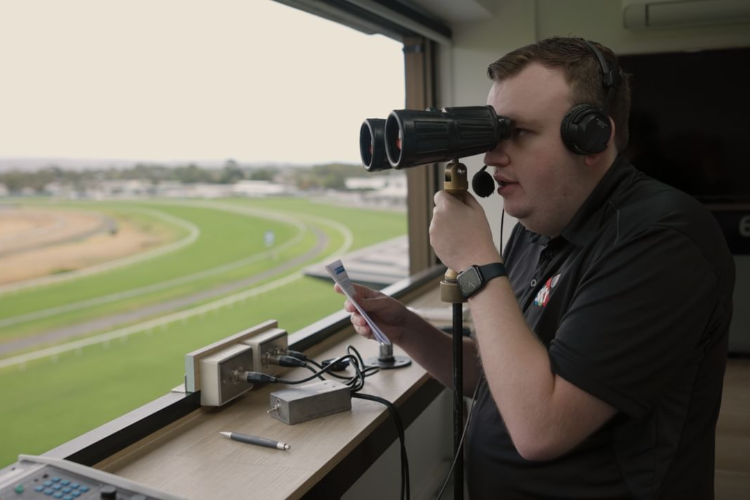
"I went home, found Sky Racing, and started calling the races to the TV," he laughs.
What began as childhood imitation quickly became something more serious. By the time Lachlan was 11, he was being invited to call pony races at Globe Derby — an opportunity that opened the door to years of practice.
"That led to calling trials, which I did for 10 to 12 years," he says. "By the time I was 18, I was calling harness races on air."
He's quick to downplay the early break.
"I was probably just lucky — Dad knew the right person," he admits. "But I loved the atmosphere of the track, and once I was there, I wanted to learn everything I could."
That willingness to show up and improve became a defining feature of his development. A major turning point came in 2018 when respected caller Jim Jacques offered Lachlan the chance to commentate a TAB meeting at Kapunda, which turned into a weekly gig.
By 2019, Lachlan was calling greyhound races and non-TAB gallops, steadily building experience across multiple codes.
"Jim really helped me break through to on-air," he says.
"He wasn't guarded about his job — he was always happy to give me opportunities and help me learn."
While his experience spanned several codes, Lachlan says thoroughbred race calling presented a new challenge, and preparation became critical.
"It's a tougher code," he explains. "Bigger fields, more names, more patterns to learn.
"I'll study for two to three hours a night leading into a race day, then spend another 30 to 40 minutes revising before the first," he added. "I'll think, if this race were run 100 times, what behaviours and comforts stay consistent? I watch replays, look at races from all angles, and even reach out to people to make sure I'm pronouncing their horse's name correctly."
For Lachlan, the thrill comes at the finish
"The best part is the feeling of pride afterwards," he says. "It stays with you when you listen back."
The pressure, however, is real.
"You're calling from one vantage point," he explains. "In a tight field, you don't see everything."
Calling the Adelaide Cup for greyhounds stands out as a career highlight, but Lachlan believes success comes back to fundamentals.
"Stay calm. Be clear, concise and accurate. The one-liners come later."
His advice to aspiring callers is simple: be patient, be present, and do the work.
"There aren't as many race callers as there used to be. Reach out, go to the track, record yourself — and don't try to do too much too early."
For Lachlan, it's all about perspective.
"I think about how excited 10-year-old Lachlan would be to know I'm calling thoroughbreds on Kangaroo Island," he says. "I'm living out my childhood dream.

Check out our FREE Interactive Speed Maps for meetings in nine countries each and every day.